
The claims file leaves your office. Here is exactly what happens to it.
Most billing pages describe a feeling. This one describes a process, in the order the work happens, including the parts that are unglamorous and the parts where we can get it wrong.
Six jobs, start to finish.
Charge entry and claim scrubbing
Charges are entered from your encounter documentation and checked for the things that get claims kicked back before a human ever reads them — missing modifiers, eligibility mismatches, demographic errors, payer-specific format rules. Then submitted electronically through the clearinghouse.
Clearinghouse rejections come back to us, not to your front desk, and are fixed and resubmitted the same cycle. Tracking payer rule changes is our job; it is one of the least visible and most expensive parts of doing this in-house.
Claim follow-up
Open balances are worked by age on a schedule, rather than when someone gets to the bottom of the pile. Aged claims get supporting documentation attached and resubmitted; where a payer needs a phone call, we make the phone call and log what was said and by whom.
The metric that matters is days in A/R. Past 40 days the odds of collecting fall away sharply, so the follow-up cadence is built around staying inside that number rather than reacting once it is missed.
Denial management and appeals
A denial is investigated, corrected and resubmitted — or appealed with documentation — when it arrives, not at month end. Every denial is logged against its reason code, and the reason codes are ranked by dollar value in your monthly report, because the point of tracking them is to stop the recurring ones.
No claim is written off without your written consent. That is a contract term. And because we are paid on collections, the cost of reworking a denial falls on us — there is no rework line on your invoice.
Payment posting
ERAs and EOBs are posted promptly so the rest of the cycle can move: secondary and tertiary claims drop automatically off the primary remittance, and patient responsibility is calculated at the point of posting rather than discovered weeks later when someone reconciles.
Underpayments are flagged against your contracted rates at posting. A payer paying consistently below contract is a pattern you want to catch in month two, not at renewal.
Patient statements and payments
Electronic statements, online bill pay, payment plans and autopay. Funds are deposited directly into your practice’s account. The practical effect is that your front desk stops being a collections department and stops having the conversation that patients like least.
Balances are identified and addressed while they are young. Payment plans and autopay are set up at your discretion, not ours. The payment-processing calculator prices this leak specifically.
Reporting
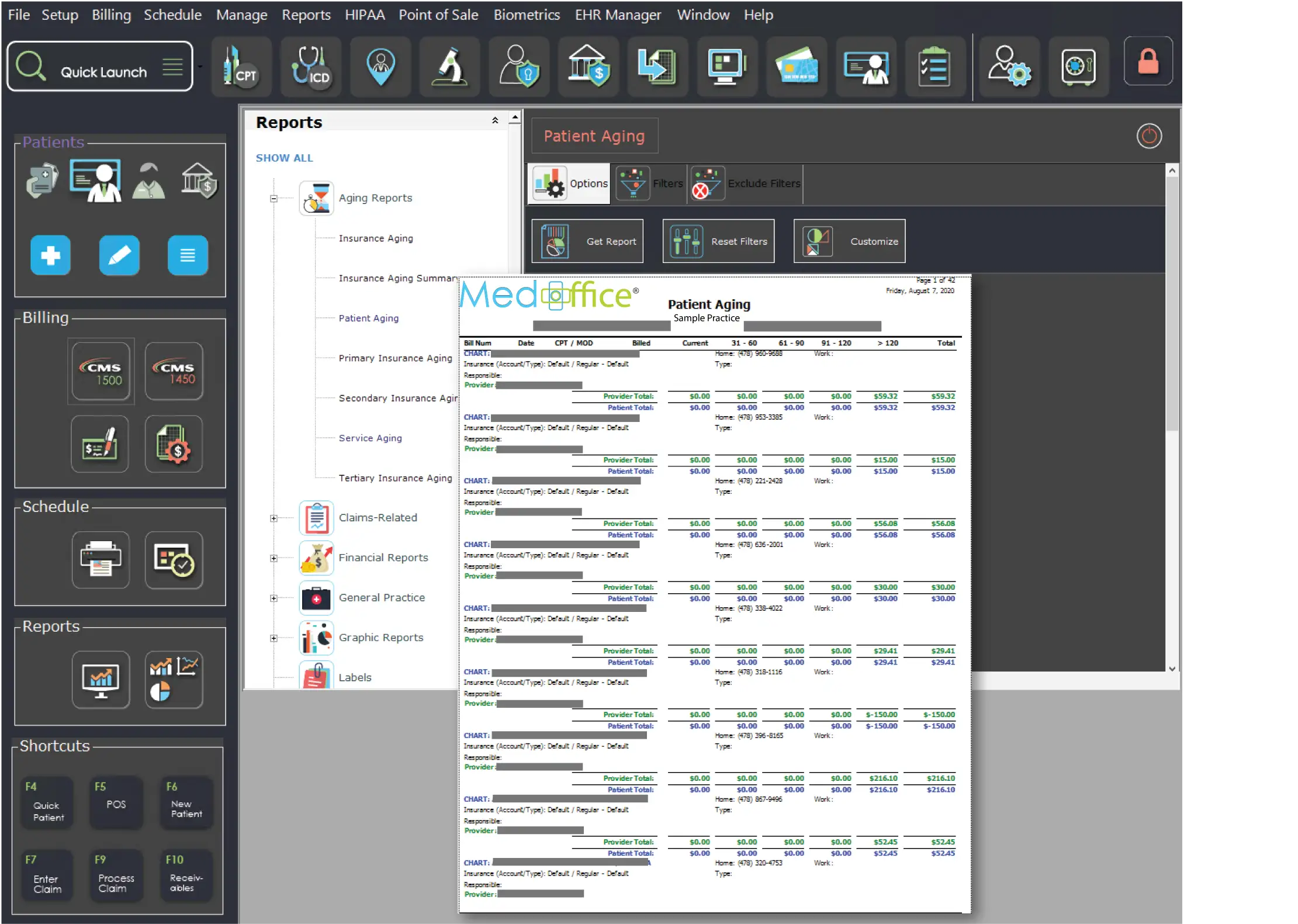
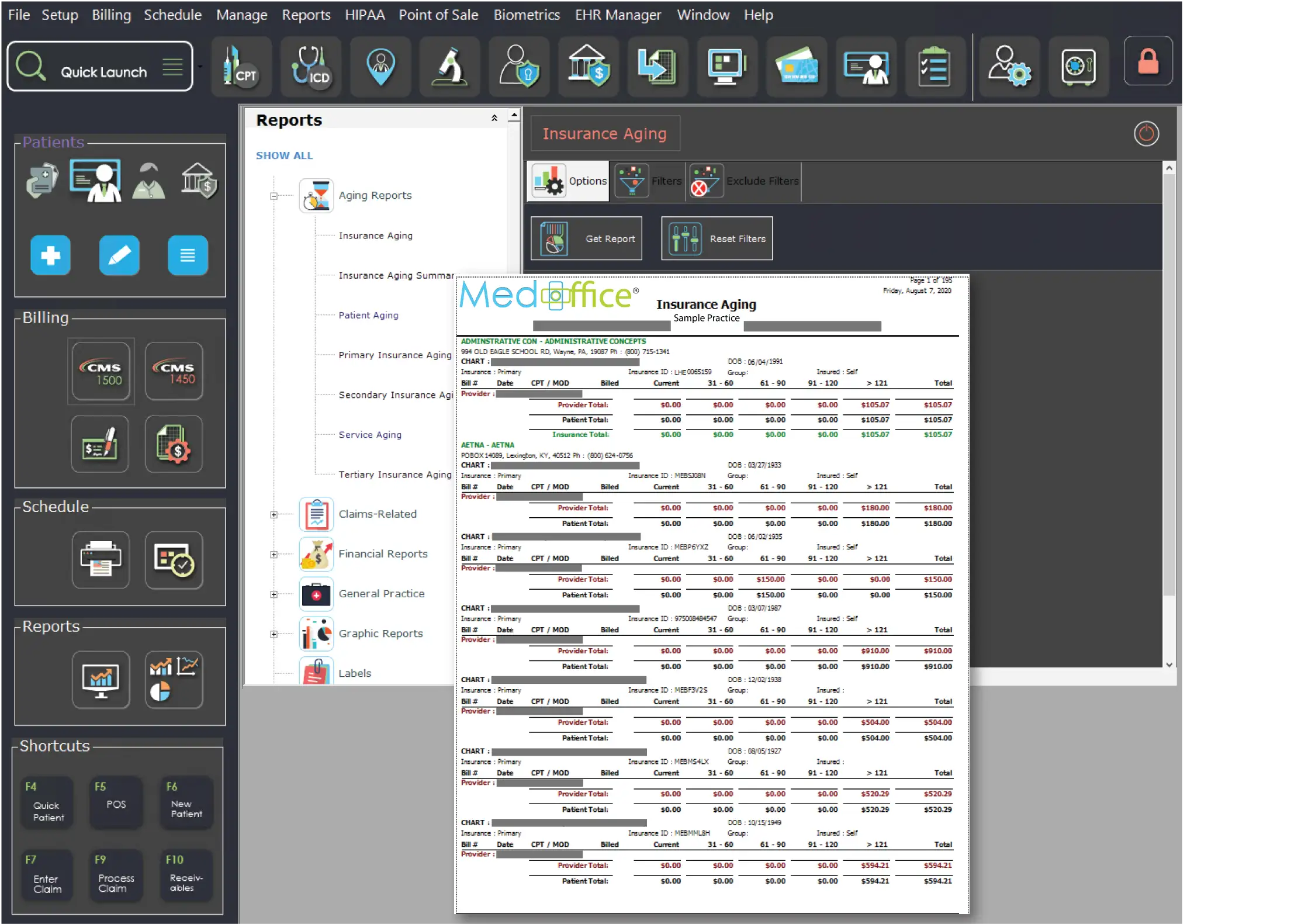
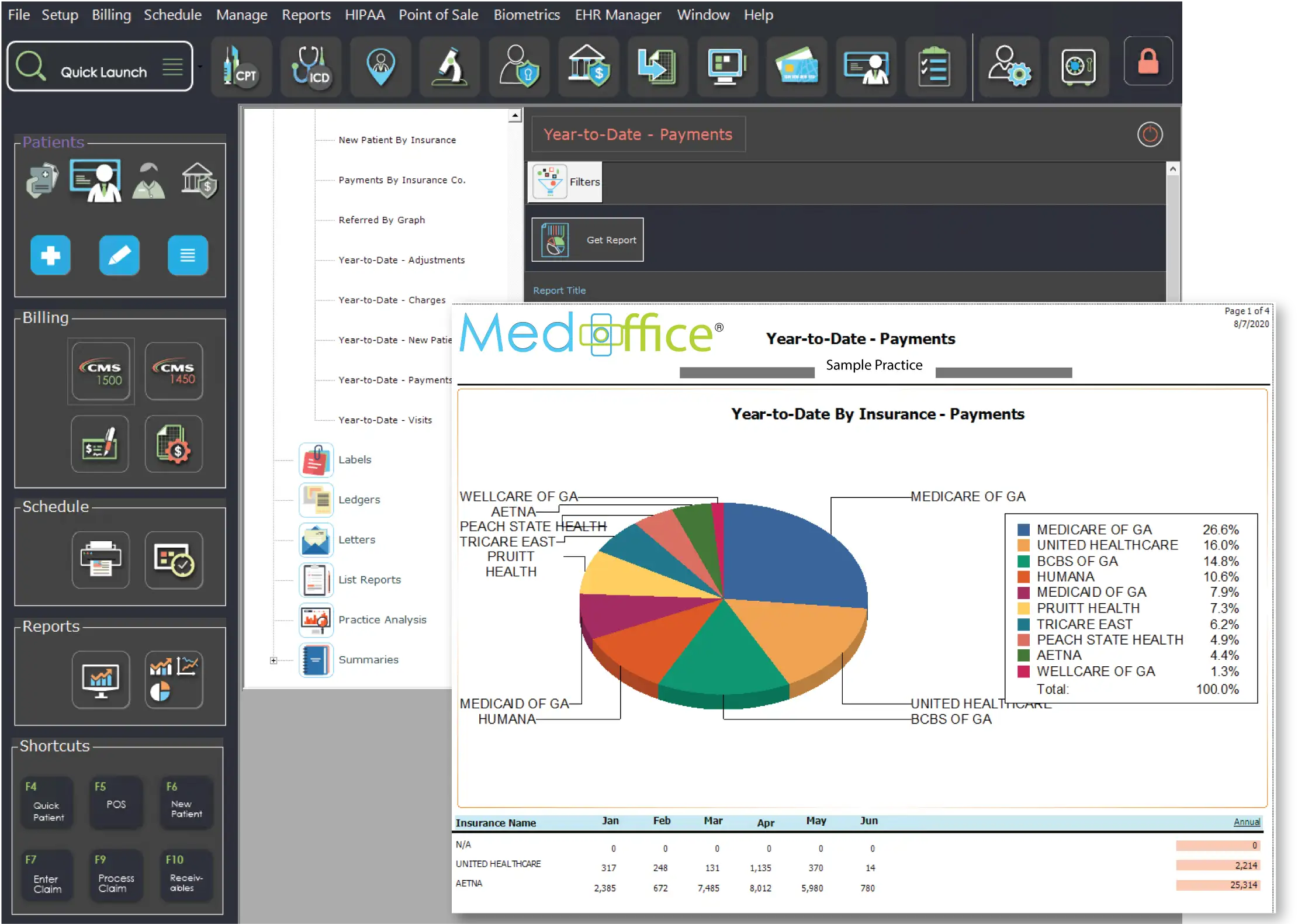
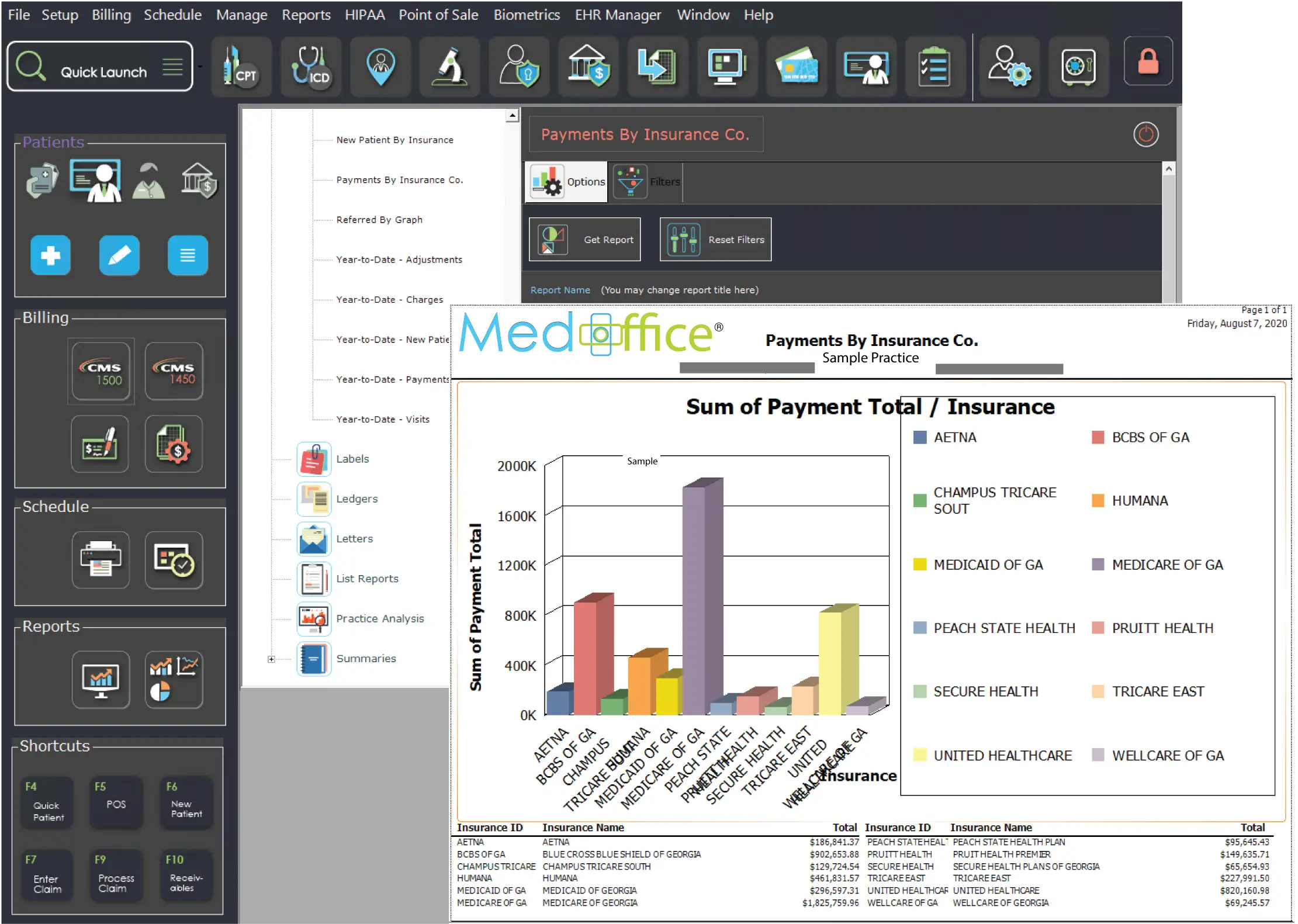
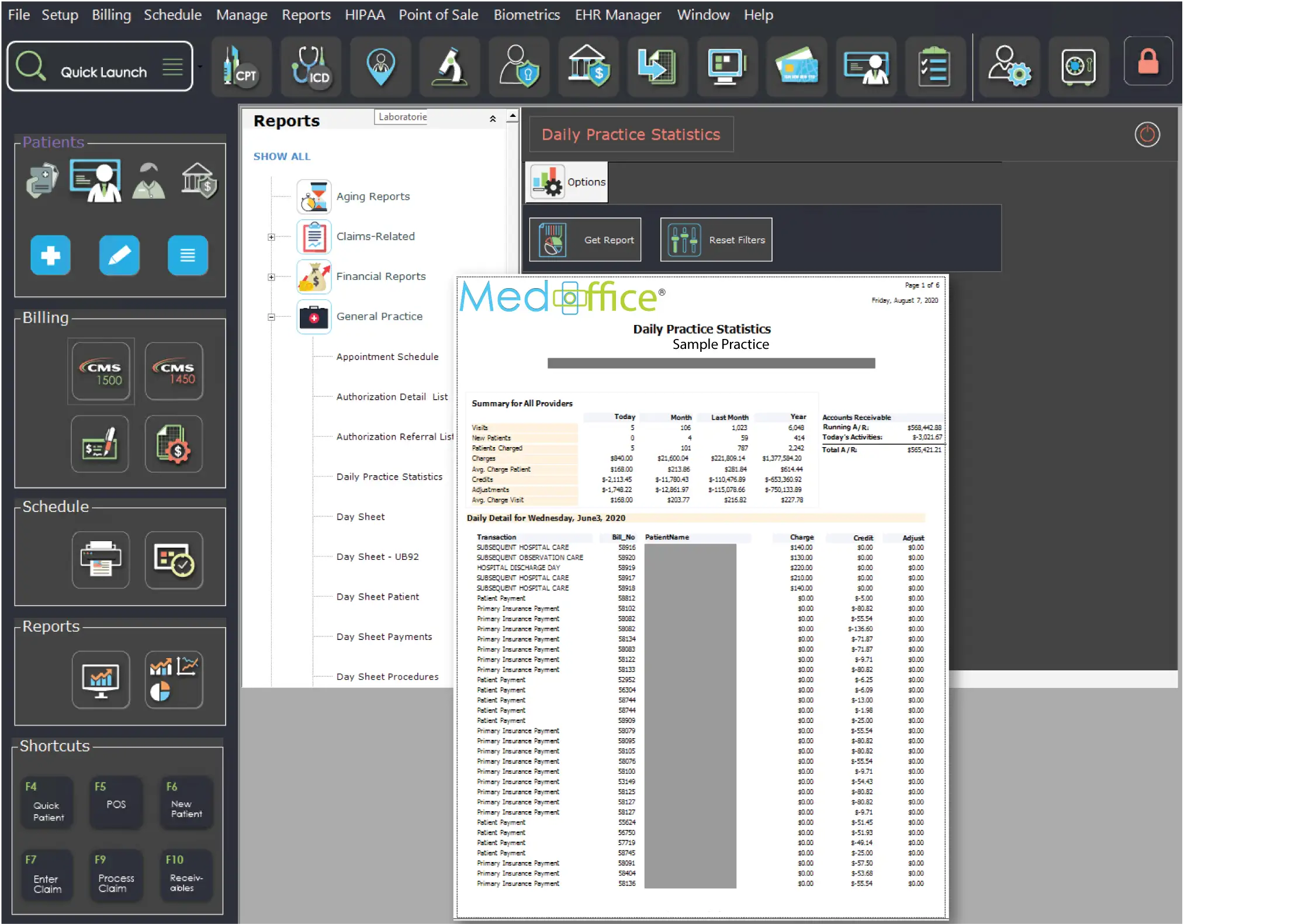
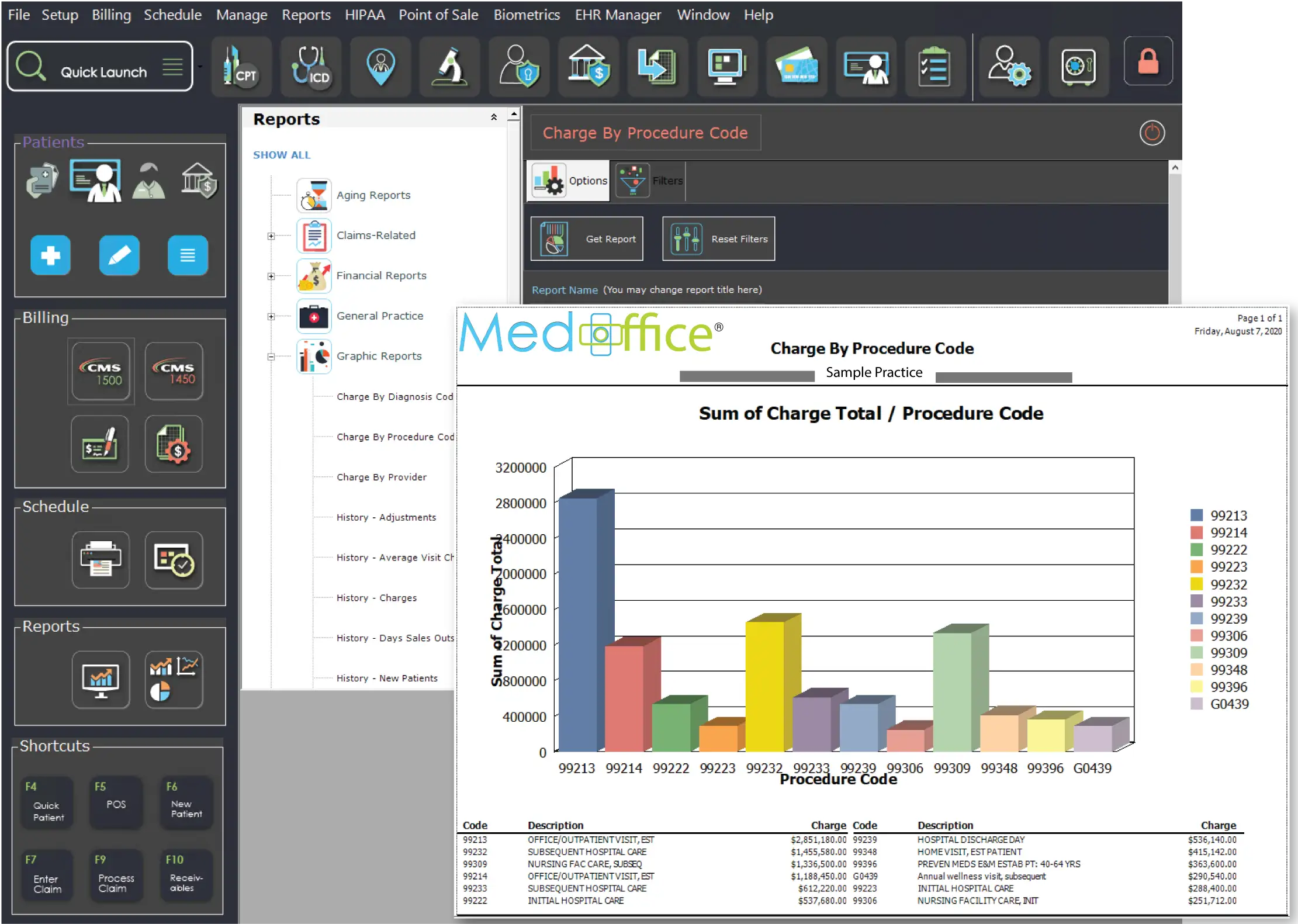
Monthly and annual financial analysis: A/R aging by payer and by patient, payer performance, denial reasons ranked by dollars, production by provider, and collected-versus-billed. Hundreds of report permutations are available.
You get your own login. You can run any of these yourself, at any hour, without asking us and without waiting for a monthly pack. A billing company that makes you request your own numbers is telling you something.
What moves, what stays, and what we are not allowed to do.
The real objection to outsourcing is not competence. It is losing sight of your own money. So the boundary is written down.
- Stays yours: clinical documentation, the patient relationship, coding decisions you want to own, and final approval on every write-off.
- Moves to us: charge entry, scrubbing, submission, follow-up, denials, appeals, posting, statements, and the payer phone calls.
- Never ours: your data. You keep your login, you can export the full database at any time, and if we part ways you leave with it.
- Never offshore: every part of this is performed in the United States.
Visit and documentation
You see the patient and document it. Your clinical day does not change.
Scrub and submit
Coded, checked against payer edits, filed electronically. Clearinghouse rejections never reach you.
Follow up and work denials
Aged balances on a schedule. Appeals with documentation attached. Reason codes logged.
Post, bill, report
ERA posting, secondaries, patient statements with online payment, then the month-end pack.
The reports, not a description of the reports.
Real outputs from the platform we run on. Every one of these is available to you directly through your own login.
We won’t quote a rate on a web page. We will tell you exactly how the rate is set — and we’ll beat what you’re paying now.
Every billing company says its pricing is fair and flexible. That is not information — it is a way of not answering until you are on a call. So instead of a number you cannot check, here is the whole method: what moves the rate, what we never charge for, and when you get it in writing.
Send us what you’re paying. We’ll beat it.
Like for like — the same services, at the same scope, with the same things included. That qualifier is doing real work and we would rather put it in writing than spring it on you: a cheaper quote covering less is not a cheaper quote, and we are not going to pretend otherwise to win the comparison.
Two things make this easy to check. We show you the scope comparison line by line, so you can see exactly what each side includes. And if we can’t beat it on a like-for-like basis, we will tell you that and tell you to stay where you are. A billing firm that only ever tells you to switch is not giving you advice.
- Send your current rate and what it covers
- We return a line-by-line scope comparison
- We beat the rate on matched scope, or say so plainly
- No obligation either way, and you keep the comparison
The model
We are paid a percentage of what we actually collect for you, above a threshold agreed in advance. Not hourly, not a flat monthly retainer, and not per claim.
An hourly or flat-fee biller is paid to process a claim whether it is approved or denied, then paid again to fix it. That is not a comment on anyone’s character; it is a description of the incentive. Their time is their revenue, so a clean claim and a dirty one pay the same. Under our model a denial costs us money, which is the only version of “aligned interests” that survives contact with a bad month.
The five things that move your rate
These are the actual inputs. Nothing else changes the number, and any two practices with the same five answers get the same quote from us.
- Specialty. Payer mix, prior-authorisation burden and denial patterns vary enormously by specialty, and they drive how much work each claim takes.
- Claim volume. More claims means lower cost per claim, and that reduction goes into the rate rather than into our margin.
- Average claim value. A percentage of a $90 claim and a percentage of a $600 claim are different amounts of money for a similar amount of work, so the percentage moves accordingly.
- Which services are bundled. Adding credentialing, coding, statements or software to billing lowers the billing rate. The second service is never priced as though it were the first.
- Your state. Some states require a fixed fee rather than a percentage of collections for billing services. Where that applies we quote fixed, and we tell you that it is the law rather than a preference.
Term length also moves it, and we would rather be blunt about the direction: a longer commitment lowers the rate. A short term is available and it costs more. We will show you both numbers side by side rather than quoting the low one and mentioning the condition later.
| Hourly or per-claim processing fees | Never |
| Charge for reworking a denial | Never |
| Charge for appealing a claim | Never |
| Fee on revenue we don’t collect | Never |
| Fee on collections below the threshold | Never |
| Charge to export your own data | Never |
| Exit fee when you leave | Never |
These are floor commitments, not introductory terms. They do not expire after a first year and they are in the agreement, not in a brochure.
Free A/R audit
You send an aging report and a superbill. Costs you about ten minutes.
Written quote within five business days
Not a verbal figure on a call you have to remember afterwards. A document, with the rate, the threshold, what is included at that rate, and what isn’t.
The workings, shown
The quote shows how the five variables above produced your number, so you can see which lever to pull if you want a different one.
Adjust, then decide
Change the scope, change the bundle, change the term — we requote. Nobody signs on the first pass.
You keep the audit and the quote whether or not you proceed, and you are free to take both to whoever else you are talking to.
A rate you cannot interrogate is not a low rate. It is just a number someone chose before you walked in.
Keeping billing in-house?
We also license and support the practice management software.